Family Travel in 2026: Moving from Passive Sightseeing to Hands-On Immersion
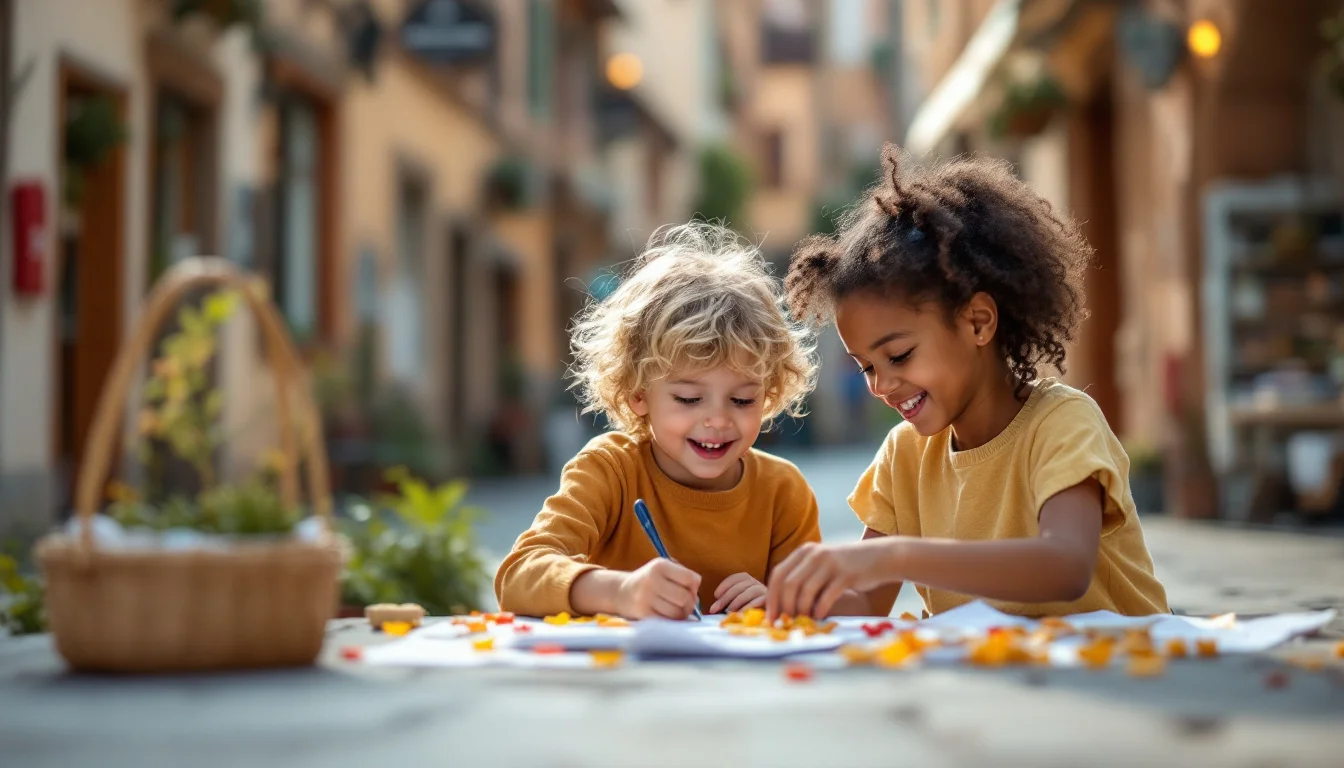
The traditional family vacation often involved dragging reluctant children through silent museums on rigidly planned itineraries. According to travel industry observers like Euro Travel Coach, families are increasingly substituting standard gallery visits with highly tactile experiences. Modern family travel can replace passive sightseeing with "stealth education"—a method that uses local workshops and an understanding of child development to create hands-on cultural immersions.
A successful family journey can be thoughtfully designed using techniques such as periodic surprise incentives and age-calibrated itineraries. Rather than expecting children to adapt to adult-paced tours, contemporary travel strategies adjust activities to the child's developmental stage. This shift recognizes that enriching vacations rely on active engagement, strategic scheduling, and an understanding of how young minds process unfamiliar environments.
Key Takeaways
- Indirect learning: According to the Euro Travel Coach family-travel guide, replacing standard historical tours with hands-on local workshops allows children to absorb regional heritage without experiencing the activity as a formal lesson.
- Age-specific scaling: Successful itineraries discard one-size-fits-all planning, instead matching toddlers with open-ended pacing, primary-schoolers with tactile history, and teenagers with experiences tailored to their autonomy.
- Strategic sequencing: Using transit-day surprise bags provides an element of unpredictability that can help reset restless behavior on demanding travel days.
- Peer-to-peer dynamics: Small-group family tours shift logistical burdens to local leaders. This creates shared challenges that foster organic connections among multiple traveling families.
Why Do Local Workshops Outperform Museums for Kids?
How Does Stealth Education Work?
A notable approach in family travel is the prioritization of hands-on engagement over passive visual observation. The Euro Travel Coach guide notes that substituting standard gallery visits with localized classes can deliver education indirectly. Because the learning is hands-on, children absorb the surrounding history and heritage without experiencing the activity as a traditional lesson. This approach may bypass the resistance younger travelers often harbor toward formal educational settings, allowing cultural appreciation to develop more organically.What Are Examples of Participatory Learning in Europe?
Across Europe, this participatory approach takes distinct regional forms. By embedding families directly into local traditions, workshops provide a physical outlet that acts as a cultural anchor. Documented examples of localized classes taken alongside children include:- Italy: Engaging in traditional pasta making.
- Poland: Mastering pierogi making in Warsaw or gingerbread making in Toruń.
- Portugal: Participating in historical tile painting.
- Greece: Taking localized painting sessions.
- France: Formulating customized scents through perfume making, an activity generally suited for older teenagers.
- Spain: Learning the complex rhythms of flamenco dancing.
What Is the Value of Active Participation?
These immersive activities demand concentration, motor skills, and immediate sensory feedback. While standing before a historical monument requires passive stamina—a resource that can be rapidly depleted in young travelers—molding dough or mixing perfumes requires active participation that holds their attention.The resulting artifact, whether a painted tile or a batch of gingerbread, serves as a tangible connection to the destination's heritage. By replacing quiet contemplation with dynamic tasks, parents can integrate cultural immersion into the itinerary while keeping the family energized.
How Should Itineraries Scale by Age Group?
Recognizing that a uniform itinerary inevitably fails, modern travel planning applies developmental scaling to destination activities. The following matrix categorizes travel approaches by age group, matching the ideal activity format with educational benefits.
| Target Age Bracket | Ideal Activity Format | The Educational Payoff | Real-World Application |
|---|---|---|---|
| Babies & Toddlers | Open-ended pacing | Sensory exposure | Fluid daily schedules adjusted for weather |
| Primary School | Hands-on, physical history | Contextual insight | Site exploration with interactive elements |
| Teenagers | Immersive experiences | Autonomy and engagement | Urban virtual reality adventures |
Babies and Toddlers: Why is Pacing Important?
For the youngest demographic, the primary strategy involves reducing schedule pressure. The Soak and Savor contributor featured in the Euro Travel Coach guide strongly recommends slowing down and deliberately lowering expectations when traveling with babies and toddlers. Planners should keep travel days mostly open, establishing only rough ideas that can be rapidly adjusted based on immediate weather conditions and the child's mood.Primary School: How Does Physical Engagement Help?
As children enter primary school, abstract concepts benefit from physical grounding. According to the Parc Les Etoiles guide, the Waterloo battlefield in Belgium serves as an example of interactive, physical history. The site features an on-site museum that explains the tactical elements of the battle in a way children find engaging. Rather than just reading historical plaques, young visitors can explore the historic grounds and climb the 226 steps of the Waterloo Mound, a monument built after the battle that is topped by a lion statue. Note that the site is not fully accessible for strollers and is better suited to children of primary and secondary school age.Teenagers: How Do We Balance Autonomy and Immersion?
Engaging adolescents requires a distinct recalibration of the daily itinerary. Eva of Germany Travel Company, writing via Euro Travel Coach, notes that maintaining a balance between adult-appealing and child-appealing activities is essential to keep everyone happy. Older kids can be drawn in by interactive and immersive experiences, such as specialized selfie museums or virtual reality adventures. As cities increasingly offer these technology-driven environments, parents can integrate them alongside traditional sites so teenagers feel their specific interests are respected.How Does Behavioral Science Improve Transit Days?
The most significant friction points in family travel reliably occur during complex logistical transfers. Addressing these tense moments requires shifting from mere distraction to strategic sequencing.
What is the Psychology of Surprise Rewards?
A recurring Euro Travel Coach practice for long hauls is the "Trip Surprises" canvas bag, wherein mystery items—such as a Mad Libs book, a coloring book, a toy, a puzzle, or a snack—are handed out when children get antsy. Euro Travel Coach suggests that the uncertainty of what the reward is and when it will be given can be more engaging for children than the item itself. This element of unpredictability can serve as an effective tool to help reset a restless child on a demanding travel day.How Do Families Navigate Urban Environments?
Beyond transit, daily itinerary sequencing relies heavily on thoughtful adjustments. A useful strategy involves pairing a demanding adult-oriented stop directly with a child-oriented reward immediately afterwards. Euro Travel Coach describes this as sweetening a museum or cathedral visit by making the next stop a playground or gelato place—an approach that can lift the whole family's tolerance for the adult activity and keep the day moving smoothly.Euro Travel Coach suggests multiple ways to make navigating urban environments more child-friendly, depending on age:
- Transport as activity: Utilizing cable cars, subway trains, or hop-on, hop-off buses is effective for small children or in areas with limited transport options.
- Active mobility: Exploring city centers by bicycle or tandem bike rental provides essential physical autonomy.
- Tailored information: Utilizing museum audio tours specifically designed for kids keeps them engaged with the material at their appropriate comprehension level.
Is a Structured Group Family Tour Worth It?
How Can Tours Reduce Logistical Burdens?
Independent travel planning often forces parents into the exhausting role of project managers, overseeing everything from train schedules to dinner reservations. In response, structured small-group family tours have grown in popularity. Intrepid Travel's family programme, for example, has traditionally been built around small-group trips designed for both kids and grown-ups. These itineraries often combine hands-on activities and real-world learning with a local leader, alongside scheduled free time that families can shape themselves.What Are the Benefits of Shared Challenges?
Outsourcing logistical execution to a local leader allows parents to transition from stressed coordinators to active participants. Intrepid describes its family trips as fundamentally building connection—not only with your own children but also with the other families in the travel group.This bonding occurs organically through shared challenges, moments of collective awe, and the processing of new perspectives together. When children travel alongside peers, they naturally motivate each other through difficult hikes or unfamiliar cultural workshops.
Frequently Asked Questions About Modern Family Travel
What defines a strong first-time international family destination?
According to a guide by Parc Les Etoiles, an ideal introductory destination is manageable in scale. Belgium is described as a compact family destination that is easy to get around, situated conveniently in Western Europe. It is highly accessible by train, car, or plane, and most places offer robust family-friendly facilities.Are structured group tours viable for families with older teenagers?
Yes. Tour operators increasingly segment offerings by age to ensure appropriate peer groups. Intrepid Travel's family itineraries, for example, include specialized departures such as safaris designed specifically for families with teenagers, alongside broader regional holidays for various age brackets.Conclusion: Building Adaptability
Ultimately, a thoughtfully planned vacation extends far beyond a week of pleasant memories. When families shift from passive observation to localized, hands-on engagement, they create conditions for meaningful developmental experiences. One of the most valuable takeaways a young traveler brings home is an adaptability to unfamiliar environments. By consistently navigating diverse cultures and unpredictable logistical scenarios, families practice shared problem-solving that prepares children for an increasingly interconnected world.